

- Highways
- 03 Mar 2026
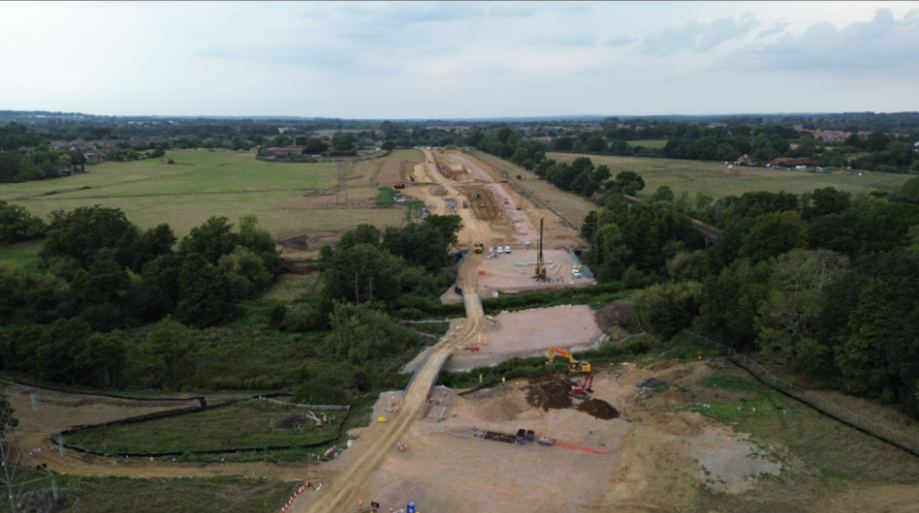
Our M Group civil engineering team were working to deliver substantial engineering works as part of the Botley Bypass project, partnering with Hampshire County Council.

Client: Hampshire County Council
Duration: August 2025- October 2025
Situation
Due to the site’s poor ground conditions, high-water table and proximity to sensitive aquatic environments of the River Hamble and associated Fish Pass, our environmental manager worked closely in collaboration with the client and external experts to create solutions to protect the biodiversity of the site, including fish migration routes.
Task
We had two key objectives:
Complete major piling works, including 130 bridge piles driven to a depth of 21 metres, along with over 1,000 ground stabilisation piles, to ensure structural integrity for the bypass.
Safeguard local fish populations by preventing ecological disturbance during their migration season, in full compliance with environmental conditions set by the Environment Agency (EA).
Action
Our team introduced innovative steps which prioritised collaboration with our client and external experts.
We engaged early with the EA and their local fisheries team to plan works outside the fish migration window.
Prior to commencing main piling works we undertook a series of test piles. Working in collaboration with specialists from Subacoustech; advanced noise and vibration monitors at two critical fishpass locations were deployed to provide real-time safety data.
Utilising the test piling results enabled the introduction of an innovative solution to temporarily isolate sections of the fishpass to protect fish from any impacts during main piling works.
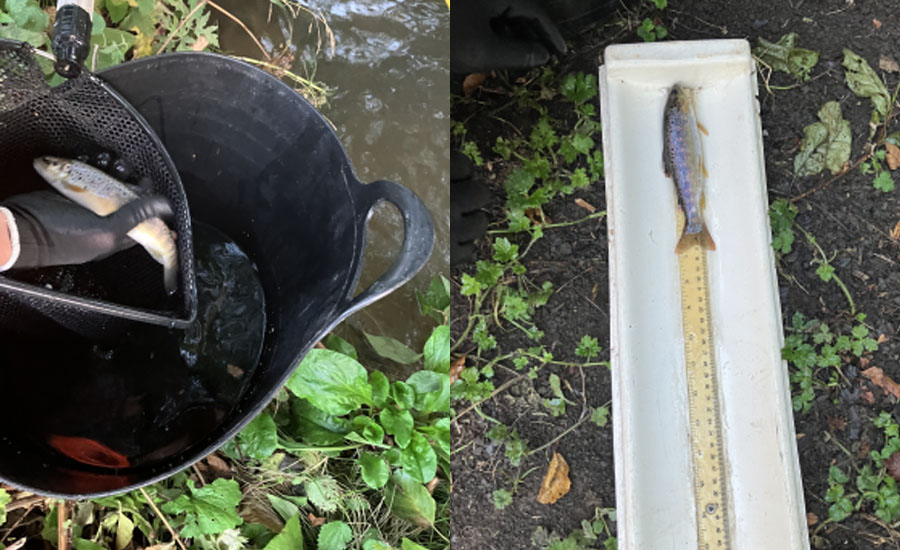
Each morning, Aquatic Ecologists from Carcinus lowered netting downstream of works and then carried out electrofishing under licence along the fish pass where piling would occur, allowing any fish to be safely netted, measured, and relocated unharmed upstream in the River Hamble. This took place daily between 6am- 8:30am, once completed Piling works were permitted to commence.
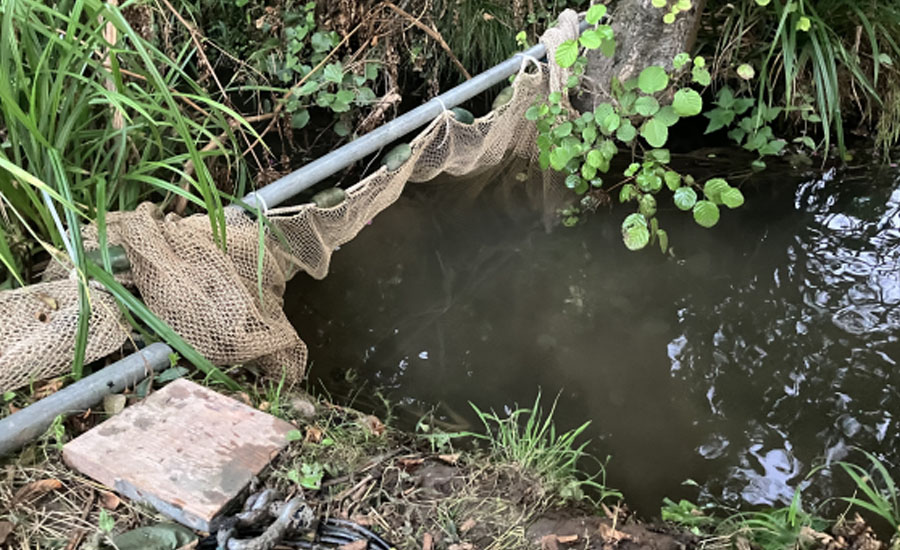
Each evening, the netting was removed from the watercourse, to allow the fish to move freely, maximising the migration window.
Result
Through proactive planning, collaboration and innovation, we were able to deliver the piling programme efficiently and ahead of schedule, with no adverse impact recorded to the local fish populations.
By monitoring our environmental impact and electrofishing daily, we were able to set a benchmark for work in ecologically sensitive, high-risk areas.
We’re proud to have delivered critical infrastructure, while protecting both built and natural environments.


